
Best Entry Point Cameras for Monitoring Garages
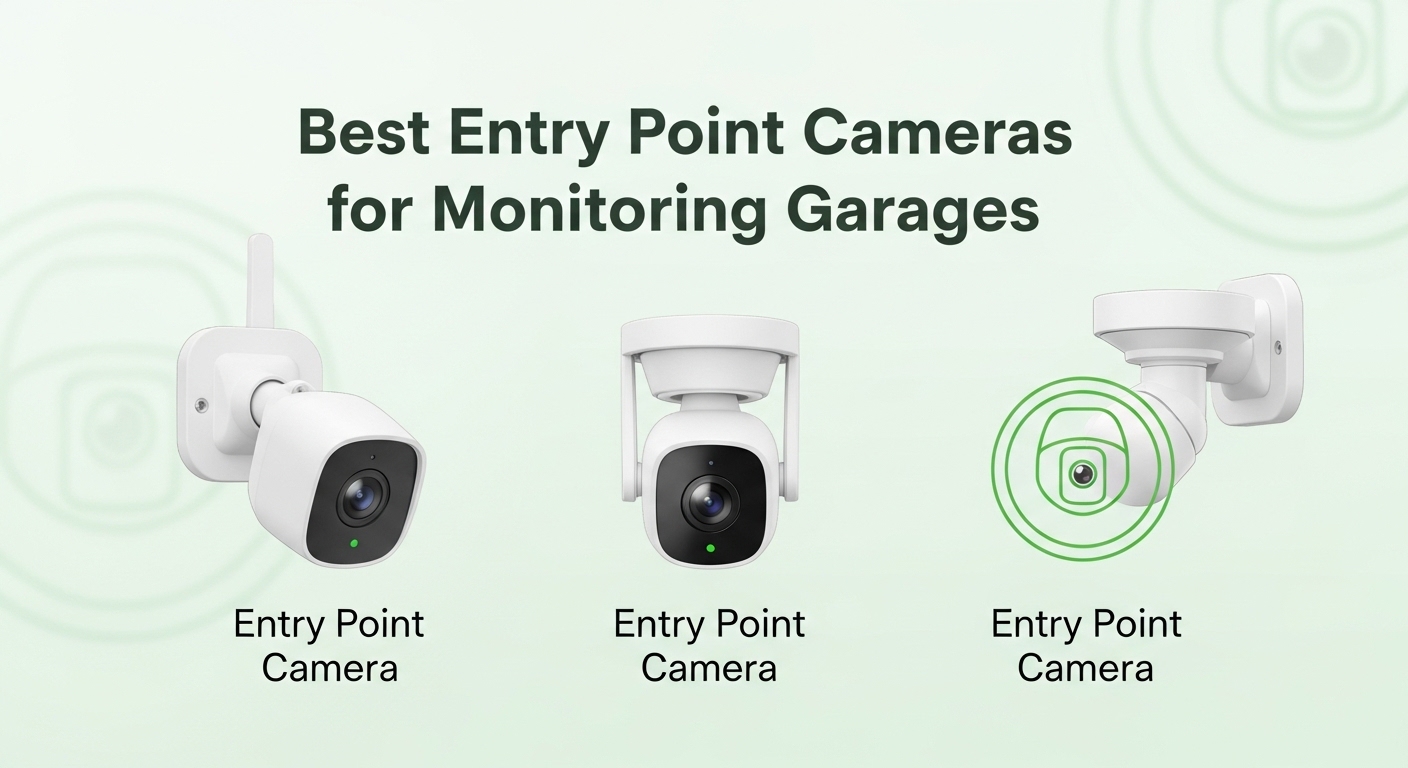
Garages are often the most overlooked part of a property when it comes to security. We secure front doors, install alarm systems inside the house, and sometimes forget that the garage may hold thousands of dollars’ worth of tools, equipment, or vehicles.
I’ve seen many cases where break-ins happened through the garage simply because it was considered “low risk.� The good news is that installing the right entry point camera can dramatically reduce that risk—without turning your garage into a complicated security project.
Let’s look at what actually works.
Table of Contents
Why Entry Point Cameras Matter for Garages
Most garage break-ins happen through:
- The main overhead door
- A side access door
- A connecting door between the garage and the house
- Driveway access
An entry point camera focuses specifically on these vulnerable areas. Instead of covering the entire space randomly, you monitor where activity actually happens.
When cameras are clearly visible, they also act as a deterrent. In many cases, that alone is enough to prevent an incident.
What Makes a Good Garage Entry Camera?
Not every security camera is suitable for garage monitoring. Based on real-world use, these features matter most:
1. Clear Video Quality (At Least 1080p)
You don’t need the most expensive system on the market, but you do need clarity. Blurry footage is frustrating and often useless when trying to identify someone.
For most homeowners or small business owners, 1080p is a solid minimum. If your budget allows, 2K or 4K offers sharper detail, especially for capturing license plates in driveways.
2. Reliable Night Vision
Garages are naturally darker environments, especially at night. A camera with strong infrared night vision is essential.
Look for cameras that can clearly capture faces at least 20–30 feet away in low-light conditions.
3. Motion Alerts That Actually Work
You don’t want constant false alarms from moving shadows or passing cars. A good garage entry camera allows you to customize motion zones so you only get alerts when it truly matters.
Smart alerts save time and prevent you from ignoring real threats.
4. Weather Resistance (For Exterior Placement)
If you’re installing the camera above the garage door or near the driveway, it must handle rain, dust, and temperature changes.
An IP65 or IP66 rating is generally sufficient for most climates.
Types of Cameras That Work Best for Garage Entry Points
Instead of focusing on hype, here are the types that consistently perform well.
Wireless Outdoor Cameras
These are ideal for homeowners who want easy installation. They connect to Wi-Fi and often run on rechargeable batteries.
They work best when:
- You have stable Wi-Fi in the garage.
- You prefer not to run cables.
- You want remote access via smartphone.
They’re simple and effective for basic monitoring.
Wired PoE Cameras (For Stronger Reliability)
For small businesses or homeowners who want maximum reliability, Power over Ethernet (PoE) cameras are a solid choice.
They require installation but offer:
- Stable connection
- No battery maintenance
- Consistent high-quality recording
If your garage security is a serious priority, wired systems are often worth the effort.
4K Entry Cameras (For High Detail Monitoring)
If your garage faces a street or shared driveway, capturing clear vehicle details can be important.
4K cameras provide:
- Sharper images
- Better zoom capability
- Clearer license plate capture
They are more expensive, but the detail can make a difference in critical situations.
Where to Install Garage Entry Cameras
Placement matters more than the brand you choose.
Here’s what works best:
Above the Main Garage Door
Position the camera high enough to avoid tampering but angled to capture faces as someone approaches.
Monitoring the Driveway
A second camera facing outward captures vehicle movement and activity before someone even reaches the garage.
Covering the Side Door
Side entrances are often less visible and more vulnerable. This is one of the most important areas to monitor.
Avoid placing cameras too high or too wide—you want clear, focused coverage of entry points, not just a general overview.
Practical Tips From Experience
- Do not rely on one camera alone if your garage has multiple access points.
- Test night footage before final installation.
- Make sure your Wi-Fi signal is strong in the garage.
- Keep lenses clean—garages collect dust quickly.
Sometimes security issues are not about equipment quality but installation mistakes.
Final Thoughts
The best entry point cameras for monitoring garages are the ones that match your environment and security needs. You do not need an overly complex system—you need clear footage, smart alerts, and proper placement.
Even one well-positioned camera can dramatically improve your garage security. If your garage stores valuable equipment or vehicles or connects directly to your home, investing in reliable monitoring is a smart decision.